How to Switch Broadband Provider Without the Hassle
Changing broadband provider is something many households put off for months, or even years. Concerns about losing service, dealing with multiple companies, cancelling contracts and arranging installation often lead people to stick with a provider they’re no longer happy with.
The good news is that switching broadband is now much easier than it used to be.
Whether you’re looking for faster speeds, better customer service or better value for money, understanding the switching process can help you make the move with confidence.
Why Do People Switch Broadband Providers?
There are many reasons households decide it’s time for a change.
Common motivations include:
- Slow broadband speeds
- Unreliable connections
- Poor customer service
- Rising monthly costs
- Moving home
- Access to full fibre broadband
- Better value packages
As full fibre networks continue to expand across the UK, more households are discovering they have alternative broadband options available that weren’t previously accessible.
Is Switching Broadband Difficult?
Not anymore.
In recent years, the switching process has become significantly simpler, making it easier for customers to move between providers without unnecessary administration.
For most residential broadband services, the process is designed to minimise disruption and reduce the amount of effort required from the customer.
In many cases, your new provider will manage much of the process on your behalf.
Step 1: Check What’s Available at Your Address
Before comparing prices or packages, it’s important to understand what services are available at your property.
Broadband availability can vary considerably between streets, neighbourhoods and individual addresses.
Checking availability first allows you to:
- Compare the technology available
- Assess potential speed improvements
- Review package options
- Understand installation requirements
You may discover that full fibre services are available even if you’ve never previously considered switching.
Step 2: Compare More Than Just Price
It’s easy to focus on monthly costs, but broadband should be assessed on overall value rather than price alone.
Consider:
- Speed
- Reliability
- Customer support
- Contract length
- Installation charges
- Equipment provided
- Upload as well as download speeds
A slightly higher monthly price may provide a significantly better experience, particularly for households that work from home, stream regularly or have multiple connected devices.
Step 3: Understand Your Current Contract
Before switching, check:
- Whether you’re still in contract
- Any early termination charges
- Notice periods
- Equipment return requirements
If you’re approaching the end of your agreement, it may be the perfect time to explore alternative providers and packages.
Step 4: Place Your Order
Once you’ve chosen a provider and package, the next step is placing your order.
Your new provider will normally:
- Confirm service availability
- Arrange installation if required
- Discuss equipment requirements
- Explain next steps
- Provide details of your activation date
Most providers aim to make the process straightforward and keep customers informed throughout.
Step 5: Prepare for Installation
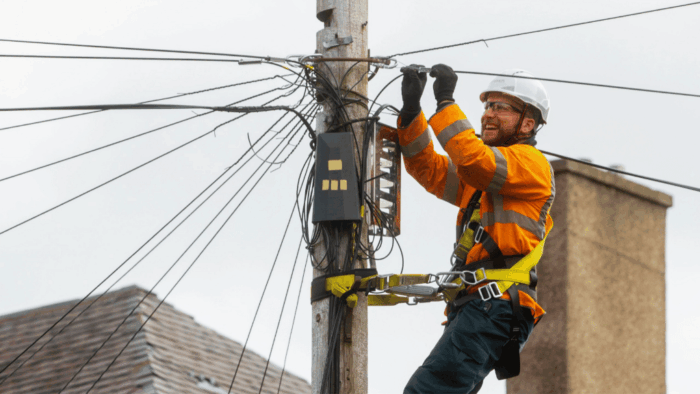
If you’re moving to a full fibre service, an engineer may need to visit your property.
Don’t worry, installations are typically straightforward and your engineer will discuss the best route for the connection before any work is carried out.
Many providers will also:
- Install and configure a new router
- Test the service
- Ensure devices can connect
- Answer any questions you may have
The goal is to get you up and running as smoothly as possible.
Will I Lose My Internet During the Switch?
This is one of the most common concerns.
While every installation is different, providers work hard to minimise disruption during the migration process.
In many cases, any downtime is limited and services are transferred as seamlessly as possible.
Your new provider will explain expected timescales and any temporary interruptions before the switch takes place.
What About My Telephone Number?
If you currently use a home phone and would like to keep your existing number, it’s important to discuss this with your new provider before placing your order.
Number transfers are often possible, but arrangements need to be made in advance.
Benefits of Switching to Full Fibre
Many people who switch broadband today are choosing full fibre connectivity.
- Benefits can include:
- Faster speeds
- Greater reliability
- Better support for home working
- Improved video calling
- Smoother streaming and gaming
- Future-ready technology
- Improved performance when multiple devices are connected
For households that rely heavily on internet connectivity, upgrading to full fibre can deliver a noticeable improvement in day-to-day performance.
Don’t Let Switching Put You Off
Many customers stay with a provider simply because they believe switching will be complicated.
In reality, the process is often much easier than expected, especially when you choose a provider that supports you every step of the way.
If you’ve been considering a change, now could be the perfect time to explore your options, compare what’s available and discover whether a better broadband experience is waiting just around the corner.